GenAI & AI Engineer
Built for real work.
GenAI and AI Engineer are the same SoftwareSchool course, taught in Telugu through recorded lessons. Learn Python, FastAPI, LLM integration, prompt engineering, RAG and AI agents. Projects include an AI Resume Builder, an enterprise document chatbot, research or sales agents, and an AI SaaS capstone with usage tracking and cost control.
Understand the course, teaching approach, and learning experience.
Build skills you can actually use.
AI Resume Builder
Structured output and reusable prompt templates.
Enterprise RAG Doc Chatbot
Embeddings, a vector database, retrieval, and grounded document answers.
AI Research / Sales Agent
Tool use, web and data workflows, and coordinated agents.
Capstone AI SaaS Agent
A deployed product with user management, usage tracking, and cost control.
Tools you’ll work with
Who is this course for?
The course includes 25 recorded Python classes at no additional charge, along with MySQL and FastAPI topics. Build your programming foundation before progressing to LLMs, RAG and agents.
AI application development: Python, FastAPI, LLM APIs, RAG, agents, evaluation, deployment and cost management.
Compare the learning paths →
Anji Reddy Co-Founder & Trainer
10+ years of industry experience across Infosys, QuickRide and SBD Automotive. Practical software skills, explained in Telugu.
Meet your trainerKnow exactly what you’ll learn.
13 modules · 133 topics · Recorded in Telugu
01Coding fundamentals4 topics+
- Python basics (recorded)
- Complete Python: 25 recorded classes included free
- MySQL
- FastAPI
02Generative AI & LLM foundations13 topics+
- AI fundamentals
- AI vs ML vs deep learning
- NLP basics
- Evolution of large language models
- Transformer architecture overview
- Attention mechanism: conceptual clarity
- Tokenization and embeddings
- Context windows and limitations
- Temperature, Top-p, and hallucination
- OpenAI, Claude, and Gemini comparison
- API-based vs open-source models
- Cost vs performance trade-offs
- Prompt tokens vs completion tokens
03Advanced prompt engineering15 topics+
- Zero-shot prompting
- Few-shot prompting
- Chain of Thought (CoT)
- ReAct: reason and act
- Role-based system prompting
- JSON output formatting
- Function calling
- Tool calling
- Guardrails
- Prompt chaining
- Multi-step reasoning workflows
- Prompt debugging techniques
- Reducing hallucination
- Cost optimization
- Latency optimization
04Retrieval-Augmented Generation (RAG)15 topics+
- What is RAG?
- Traditional RAG vs agentic RAG
- Chunking strategies
- Embeddings deep dive
- Similarity search
- Pinecone and Chroma overview
- LlamaIndex basics
- Indexing strategies
- Metadata filtering
- Hybrid search
- Context injection strategies
- Re-ranking
- Evaluation of RAG outputs
- Project: Enterprise Document Chatbot
- Project: Resume-based Q&A bot
05AI agent architecture & design patterns14 topics+
- What is agentic AI?
- Agent vs LLM vs workflow
- Agentic AI building blocks
- Single-agent vs multi-agent systems
- Human-in-the-loop systems
- Planning pattern
- Reflection pattern
- Tool-use pattern
- Multi-agent collaboration pattern
- Memory architecture: short-term vs long-term
- LangChain overview
- LangGraph fundamentals
- CrewAI fundamentals
- AutoGen basics
06Multi-agent systems & autonomous workflows11 topics+
- Role-based agents
- Coordinator-agent pattern
- Agent communication strategies
- Task decomposition
- Workflow orchestration
- Long-running agent systems
- Agent state management
- Error handling in autonomous workflows
- Project: AI Research Agent
- Project: AI Sales Intelligence Agent
- Project: Multi-agent content automation system
07Fine-tuning & local LLMs9 topics+
- When to fine-tune vs when to use RAG
- LoRA and QLoRA basics
- Hugging Face ecosystem
- Model evaluation basics
- Dataset preparation basics
- Running local LLMs
- Performance trade-offs
- GPU vs CPU considerations
- Security implications
08Production-ready AI applications16 topics+
- OpenAI and Claude API integration
- Streaming responses
- Rate limits and error handling
- Secure API handling
- Authentication strategies
- Chat history storage
- Context trimming
- Conversation state management
- Token usage tracking
- Per-user cost control
- Budget caps
- Cost estimation per SaaS user
- Input validation
- Prompt injection handling
- Output moderation
- Secure system prompt design
09Capstone: AI SaaS product development11 topics+
- Build one complete AI product
- Option: AI Resume Builder
- Option: AI Interview Coach
- Option: AI Sales Automation Agent
- Option: AI CRM Intelligence Layer
- User management
- API usage tracking
- Cost dashboard
- Deployment-ready structure
- Scalable architecture
- Basic logging and monitoring
10Deployment & DevOps for AI systems7 topics+
- Deploy AI apps on AWS
- Server setup basics
- Environment management
- API keys and secret handling
- Monitoring and logging basics
- Scaling considerations
- Deployment checklist
11Observability & monitoring6 topics+
- AI output evaluation
- Prompt experimentation
- Workflow tracing
- Error logging
- User feedback loop integration
- Agent performance monitoring basics
12Career upgrade & portfolio development8 topics+
- How to list AI projects
- GitHub project structuring
- Writing AI-focused resume bullet points
- AI interview questions
- Explain LLM architecture
- Explain RAG for interviews
- Explain agent systems
- Cost optimization discussions
13Freelance & SaaS monetization4 topics+
- Sell AI automation to clients
- SaaS pricing models
- Consulting positioning
- Proposal structure basics
GenAI & AI Engineer course questions
What will I learn in the GenAI & AI Engineer course?
GenAI and AI Engineer are the same SoftwareSchool course, taught in Telugu through recorded lessons. Learn Python, FastAPI, LLM integration, prompt engineering, RAG and AI agents. Projects include an AI Resume Builder, an enterprise document chatbot, research or sales agents, and an AI SaaS capstone with usage tracking and cost control.
Where should I start?
The course includes 25 recorded Python classes at no additional charge, along with MySQL and FastAPI topics. Build your programming foundation before progressing to LLMs, RAG and agents.
What is the GenAI & AI Engineer course fee?
The fee is ₹4,999 for three years, or ₹7,500 for lifetime access. Prices are in INR and include applicable taxes. Doubt and error support is included throughout the selected period.
Can I upgrade to lifetime access later?
Yes. While your paid course access is active, eligible learners can upgrade in My Learning by paying the current lifetime price minus their original payment, including any original discount. Upgrades include lifetime course-related support, do not accept coupons and do not restart the original refund window. Contact support for migrated or manually granted access.
Are the courses live or recorded?
All courses use recorded lessons taught in Telugu. Learn at your own pace, revisit topics, and practise alongside the recordings.
How do I get help with doubts and coding errors?
Personal doubt and error support is available through WhatsApp and Zoom throughout your purchased access period. Share the problem you are working on and get guidance to understand and resolve it.
How long can I access the course and support?
Choose three years or lifetime access when purchasing. Course access and doubt support are included for the full selected period.
Can I use my account on more than one device?
One login session is allowed at a time. Signing in on another device ends your previous sessions. Multiple tabs in the same browser can use the same session.
Is career preparation included?
The curriculum includes interview and resume preparation, with project development and guidance to help you explain your work. Student outcomes are individual experiences, not a promise of employment.
Can I view the syllabus and demo before purchasing?
Yes. The course introduction video and full syllabus are available on this page without signing in. Review the topics and teaching approach before choosing an access plan.
For purchase terms, read our terms and conditions and refund policy.
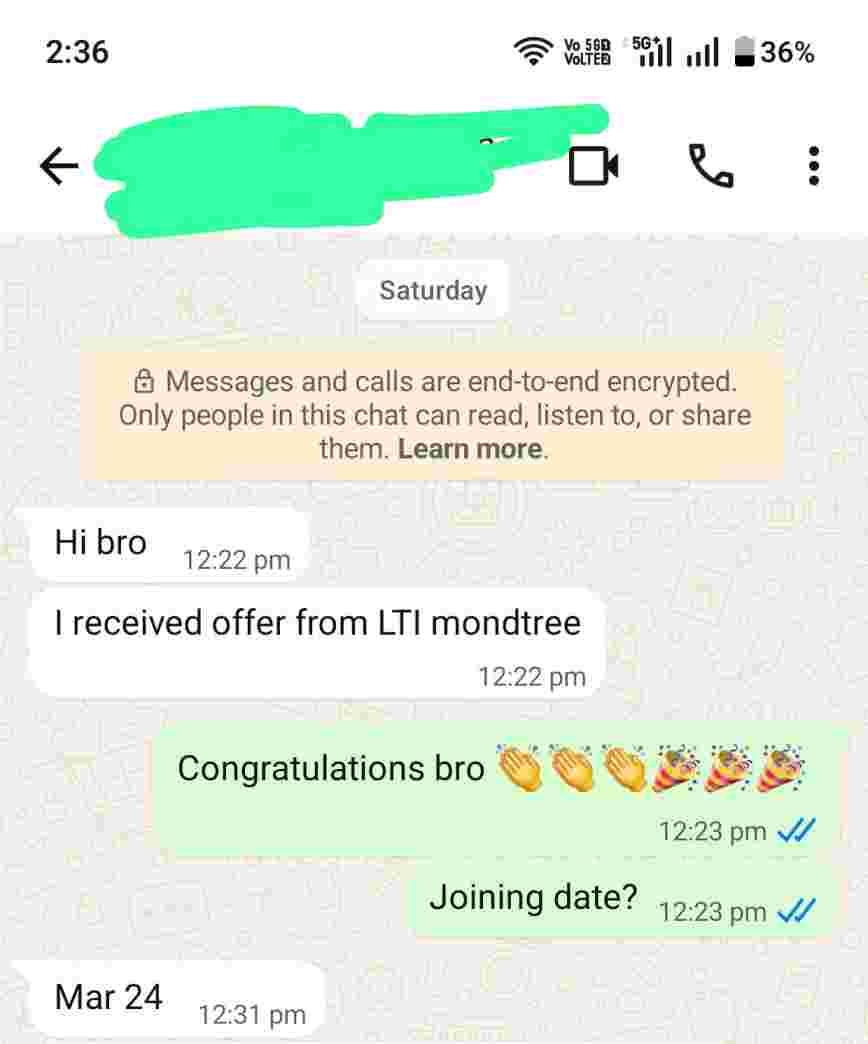
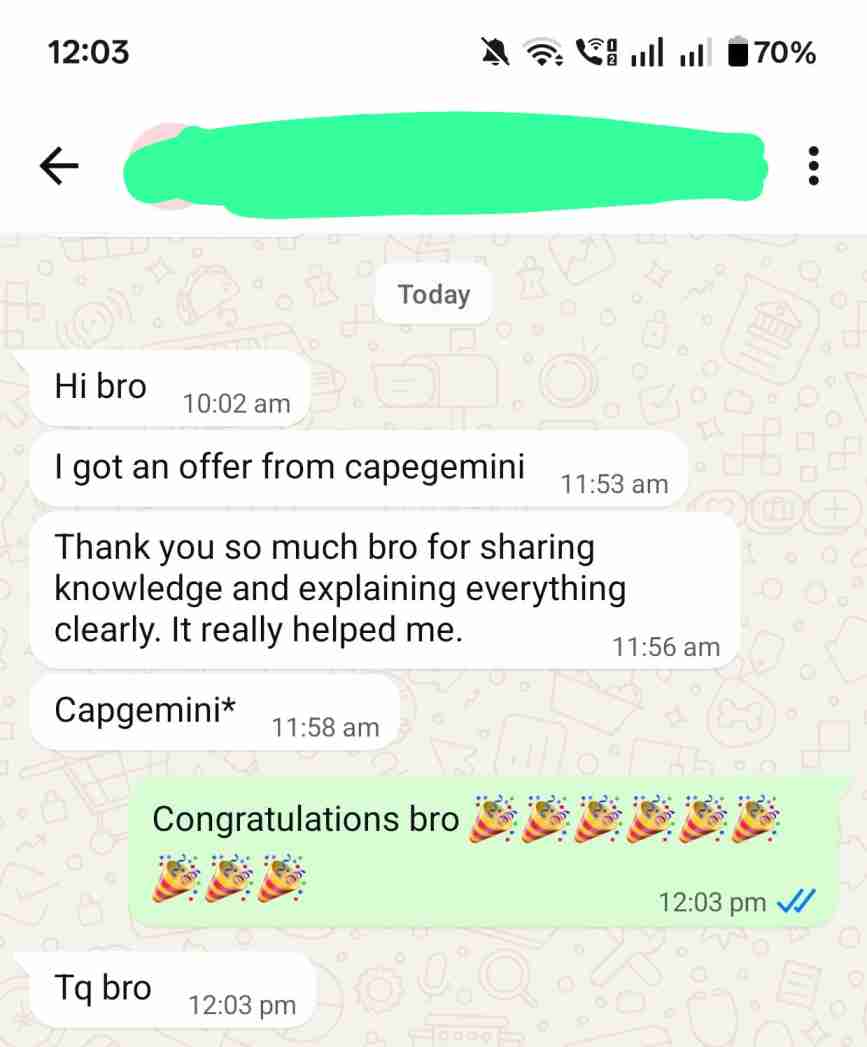
Real experiences.
Shared by our students.
In their own words. Open any screenshot to read it in full.